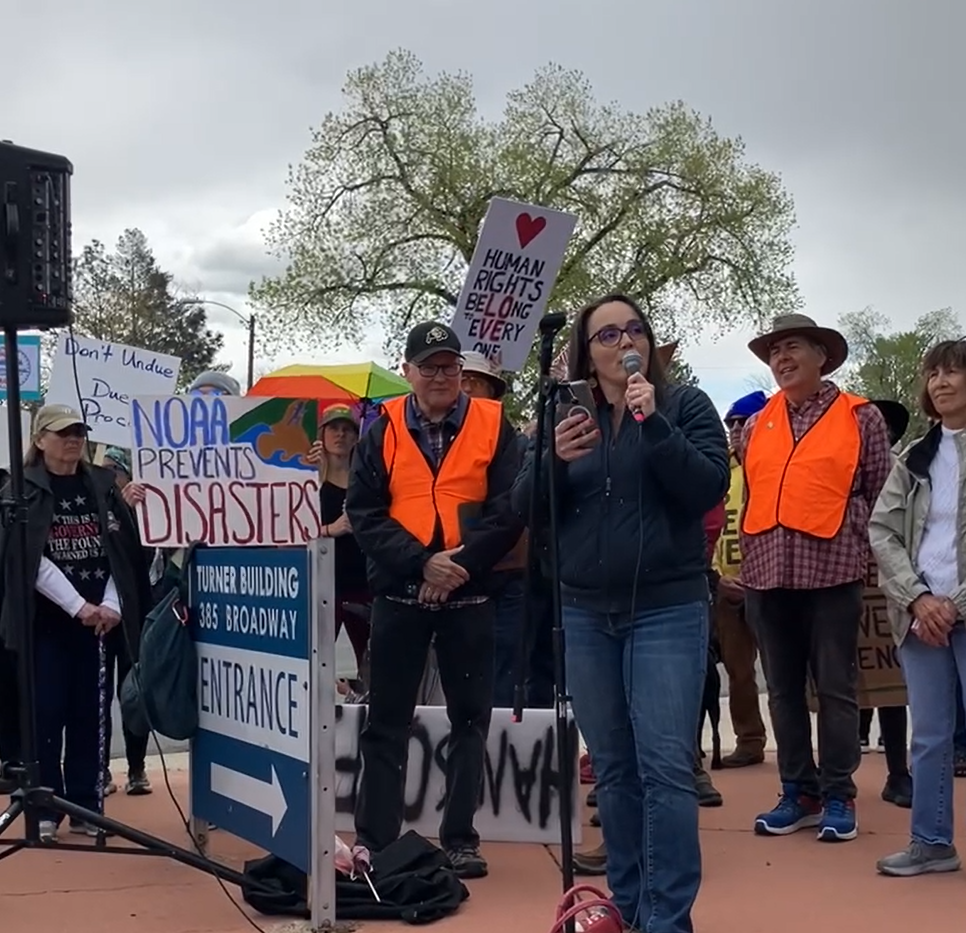
Community-building is our strongest defense
Strengthening our connections to each other is how we protect our community from harm.

“When will they come here?”
“How are we preparing?”
“Is it true they were on Pearl Street today?”
Many of us are feeling fear and anxiety right now, watching federal immigration raids and violence unfold across the country, and wondering when it will happen here.
I feel it, too.
I’m sad we’re here. I’m angry because none of this had to happen, and the people who could have changed our course didn’t. And I’m exhausted because other challenges don't pause while democratic norms are unravelling.
But I’ve found a ray of hope in the past couple of weeks in the way Minneapolis is responding to federal occupation. Neighbors are taking each other’s kids to school, bringing each other groceries when it isn’t safe to go out, and setting up trusted communication networks to share information quickly and check on each other.
Much of what we're seeing in Minneapolis isn't dramatic or organized around a single group or leader. It’s just ordinary people taking care of each other because they know they have to, even when it puts their own lives at risk.
Many in our community have been inspired, too, because over the past week, more and more people have been asking me the same questions:
“How can I help?”
“Who’s getting our neighborhoods ready?”
“How do we do what Minneapolis is doing?”
These are exactly the right questions to be asking, and their answers will make all of us safer for whatever lies ahead.
Minneapolis had a head start on neighborhood-level responses to ICE's unlawful actions. They have more unions and unionized workers, and the organizing networks that developed in response to Philando Castile’s and George Floyd’s murders.
We don’t have those networks to the same degree as in Minneapolis, but we know how to organize them here. We’ve done it after each tragedy: the 2013 floods, the COVID-19 pandemic, the Marshall Fires, the King Soopers shooting, the firebombing on Pearl Street. When something terrible happens, people in Boulder show up for each other. We open our homes, feed each other, watch each other’s kids, and make sure the people who are hurting aren’t left to figure it out alone.
The organizing we've done in response to past crises is exactly what we need to strengthen now, because community has always been and will always be the antidote to fascism. When we show up for each other, we hold on to our shared humanity even when everything around us is pushing in the opposite direction. The stronger our community connections, the less likely we are to turn against each other or leave each other behind. That makes all of us safer.
If you’re feeling sad, angry, and exhausted right now, know you’re not alone. Take a breath. Feel what you’re feeling. And then reach toward someone else.
What can I do?
If you’re looking for some tips on how to help strengthen your neighborhood's connections, here are a few places to get started:
We Keep Us Safe Colorado - learn how to organize proactively and effectively to protect your neighborhood from illegal ICE actions.
CORRN (Colorado Rapid Response Network) - report or verify a suspected ICE sighting, volunteer to document ICE actions across the state.
Colorado Immigrant Rights Coalition - find resources and training opportunities to support immigrants and refugees in Colorado.